News & Commentary
"Integrity" and the Voter Purge: Too Many Unanswered Questions
The 2012 voter purge was like a bad joke – using unreliable government databases, the state of Florida tried to remove people from the voter rolls in the name of fighting voter fraud, but with no actually evidence of voter fraud to be found. The result was a disaster, with elections supervisors describing it as “embarrassing,” “sloppy,” and “disgusting.” Now, to add insult to injury, the state is planning to use the same erroneous databases from last year to make Florida elections the laughing stock of the country again. We don’t trust it, and neither should you: if you or someone you know wrongfully receives notice that you are being removed from the voter rolls, contact the ACLU of Florida for help.

"Amores de Mi Vida:" A Celebration of Love
Soyara Alcalá
A few weeks ago, I had the honor of hosting the screening of "Amores de Mi Vida,” organized by the ACLU of Florida, an audiovisual project where members and supporters of the greater Miami Hispanic LGBT community shared stories of the loves of their lives. When I was invited to participate, I did not hesitate for a second, since I can remember I have actively defended the rights of the LGBT community. This event highlighted the extraordinary qualities of each of the participants, was an audiovisual project that celebrated love in all its forms, as narrated by 26 members of the South Florida community.
Listening to the stories of people including Inaugural Poet Richard Blanco, State Representative Jose Javier Rodriguez, Vice-Mayor of the City of Hallandale Beach Alex Lewy, among many others, we were immediately moved by the unifying power of love and respect.
By Guest Blog
Release the Vote: Felon Disenfranchisement in Florida
In 2011, we saw a triple play of voter suppression with redistricting, HB 1355 (dubbed the Voter Suppression Act), and regressive changes to Florida’s Clemency Rules. The Florida legislature is accountable for the first two and to their credit, they did try to fix some of the mess that they created. But, Florida is not off the hook yet with disenfranchisement.
It saddens me to say that Florida ranks high on the list of states that disenfranchise individuals indefinitely after they have returned to the community. And as a result, our state’s denial of voting rights for people with past felony convictions is about to go under the international human rights microscope.
By Joyce Hamilton Henry
Out of the Shadows and into to the Streets!
Paola Everett also contributed to this blog
As the country faces multiple national problems, including the most recent government shutdown, the immigrant rights movements have taken to the streets to remind Congress of yet one critical issue that has stalled because of the same gridlock: immigration reform. The need for reform is urgent, and across Florida and across the country people have been publicly declaring that the time is now to pass meaningful reform that will improve the lives of millions.
From California to our communities in Florida, October has been a key month for immigrant rights groups sending a wave of pro-immigration reform actions. Here are just a few of them that the ACLU of Florida has been involved with:
Why Have 1.5 Million Floridians Been Banned from Voting?
Joyce Hamilton Henry also contributed to this blog.
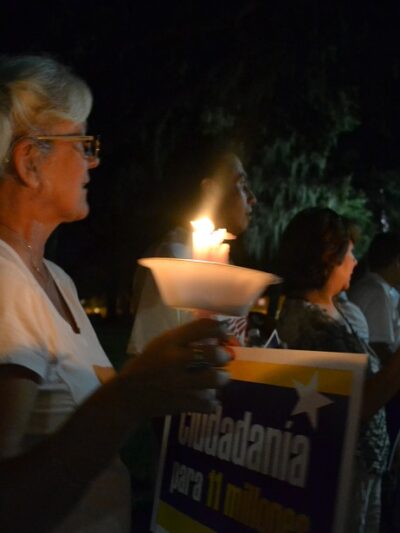
The struggle to protect the fundamental right to vote for people with a felony conviction is nothing new in this country, but has now reached a crisis level. Almost six million people are denied the right to vote because of felon disfranchisement laws that perpetuate racial and economic disparities by excluding citizens from the democratic process even after they have paid their debt to society. Last week none other than Sen. Rand Paul (R-KY) came out in favor of restoring the right to vote for the formerly incarcerated.
The result is of the injustice of felony disenfranchisement is that people, especially people of color, are legally barred from participating in our system of government, and denied a say in the issues that impact their communities. Factors that contribute to so many people's involvement in the criminal justice system in the first place are then rarely addressed.
SAFE Act Anything But
By Eduardo Gonzalez, former director of the U.S. Marshals Service.
I have worked as a law enforcement professional for 34 years, rising through the ranks from patrolman to deputy director in the Miami-Dade Police Department during a 27-year career. Later, it was my privilege to return to my hometown of Tampa when I was selected to serve as its police chief. Finally, I was given the opportunity to serve at the national level as director of the U.S. Marshals Service for the past five-and-a-half years of my career.
There isn’t anyone I’ve worked with in law enforcement who would disagree that the single most important asset local police have in protecting public safety is the trust and cooperation of the community they are sworn to protect.
By admin
Divercycles: Biking Beyond Borders
By Adam Schachner, Emerge Miami
Miami is a city renowned for its cultural diversity and infamous for its fragmentation and lack of togetherness. Despite these differences, one popular year-round activity unites South Floridians of all backgrounds: bicycling.
We are a bicycling city. The traffic may be contentious and the roads may be busy, but bicyclists come together on our streets and find their way to each other’s neighborhoods, share a commute, and overlook cultural boundaries to enjoy an active and engaging lifestyle. From early morning cycling groups to enthusiastic Critical Mass rides, Miamians set aside their partitioned neighborhood associations to become one cultural group as a bicycle community.
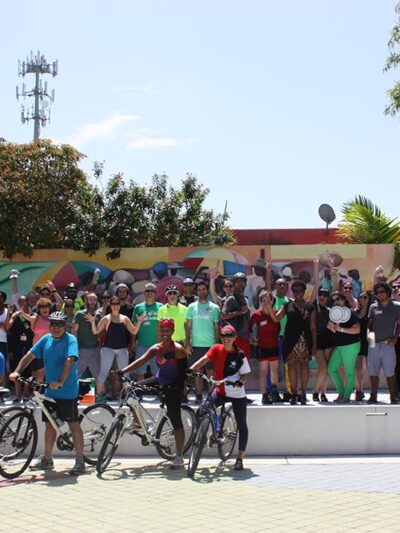
On September 14, bicycle riders, representing a broad spectrum of cultural backgrounds, came together for Divercycles.
By admin
Constitution Day: What Precisely Are We Celebrating?
On Tuesday, September 17th, we celebrate the 226th birthday of our Constitution. But what precisely should we celebrate?
The founders of this country created a remarkable document. It is the legal and political framework for our democracy. But it was a deeply flawed document.
Because strict legal limits on the power of government are needed in a majoritarian democracy, principles protecting individual liberty were codified in a Bill of Rights, which was not part of the Constitution as it was drafted on September 17, 1787, nor was it part of the Constitution submitted to the 13 states for ratification.
So when we celebrate the Constitution, we celebrate not only those who created the Constitution during the summer of 1787, but also those who had a broader vision of liberty and fought to improve it.
The March on Washington: Dream of a Better America
ACLU of Florida’s Field Coordinator Nikki Fisher is attending the 50th Anniversary March on Washington. She will be blogging her experiences for ACLUFL.org
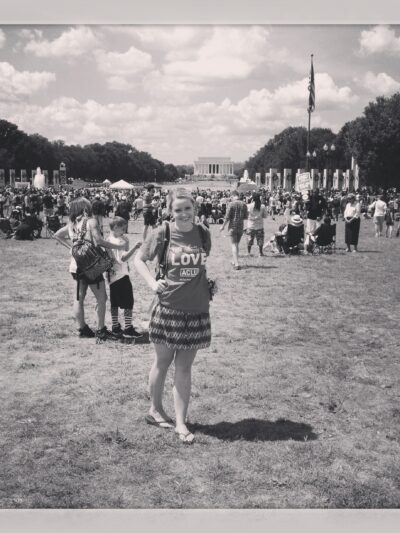
This past weekend, I traveled to Washington DC to commemorate the 50th Anniversary on the March on Washington. Friends and colleagues have been asking me how I would describe the trip. The best explanation: I have been on cloud nine since Saturday. The energy, inspiration, and enthusiasm of the crowd were indescribable. The diversity of messages, of people, of generations, and sex, race, religion and everything else all involved in thefight for justice in the United States was inspiring. Seeing the continued struggle of all Americans coming together on Washington is something I will never forget.
By Nikki Fisher
Stay Informed
Sign up to be the first to hear about how to take action.
By completing this form, I agree to receive occasional emails per the terms of the ACLU’s privacy statement.
By completing this form, I agree to receive occasional emails per the terms of the ACLU’s privacy statement.