News & Commentary
Florida Cannot Drug Test People Simply Because They’re Poor
Jason Williamson
ACLU National Staff Attorney
Remember that amazing Daily Show segment a couple years ago in which a correspondent asked Florida Governor Rick Scott to pee into a cup? Governor Scott was dead set on forcing some of the state's poorest, most vulnerable citizens to submit to humiliating and expensive drug tests before they could receive public benefits. According to the Daily Show correspondent, it should follow then that lawmakers, including Governor Scott – who also cash checks that come from public funds – should receive the same treatment.
Not surprisingly, Governor Scott refused to have his urine tested for drugs. Why? We can only guess, but it's probably because mandatory and suspicionless drug tests are invasive, offensive, ineffective, and – as of this week – officially unconstitutional.
By Guest Blog- ACLU National

Goodlatte's "Safe to Harass" Act Doubles Down on Enforcement and Cost to Taxpayers
By Dara Lind
This was originally posted on America's Voice.
We know that House Republicans are in denial about the human cost of immigration enforcement and massive deportations. That's why they'd rather kick immigrant families out of their offices than face up to the true consequences of enforcement-only policies. This week, two new developments make it clear that the denial runs deep: Congress isn't even willing to acknowledge the financial cost that enforcement is imposing right now on state and local governments, and the SAFE To Harass Act would (unsurprisingly) just make the problem worse.
Immigration enforcement always ends up being more costly to state and local governments than they ever imagine. Alabama's law HB 56 cost an estimated $11 billion to the state's economy.
By Guest Blog- ACLU National

Court Rules Cross Must Come Down
By Heather L. Weaver, ACLU Program on Freedom of Religion and Belief
Yesterday, a district court ruled that the federal government may no longer display a 43-foot Latin cross on Mt. Soledad in San Diego, California. The Court's order, which prohibits the government from "displaying or continuing to allow the display of the current cross on federal land as part of the Mount Soledad Veterans Memorial," follows a 2011 decision by the U.S. Court of Appeals for the Ninth Circuit holding that the display violates the fundamental principles underlying the Establishment Clause of the First Amendment to the U.S. Constitution.
The ACLU and the ACLU of San Diego and Imperial Counties brought this case on behalf of the Jewish War Veterans of the United States of America, the oldest veterans' organization in the country, and other plaintiffs because we believe that government war memorials should honor veterans of all faiths, as well as those of no faith. The Constitution requires no less, and a gigantic, 43-foot Latin cross doesn't come close. As the Court of Appeals explained, "The use of such a distinctively Christian symbol to honor all veterans sends a strong message of endorsement and exclusion. It suggests that the government is so connected to a particular religion that it treats that religion's symbolism as its own, as universal. To many non-Christian veterans, this claim of universality is alienating."
By Guest Blog- ACLU National

Time Out Is for Kids. This Isn't.
By Amy Fettig, ACLU National Prison Project & Tanya Greene, Advocacy and Policy Counsel
"I developed techniques to survive. I've learned to play chess with other [kids] through a six-inch wall to keep myself occupied. But for others, it breaks them, makes them either violent or suicidal."
These are the words of Lino Silva, who had been incarcerated in a juvenile facility for over seven years when she wrote them. The "it" she mentions is solitary confinement, a practice that juvenile facilities routinely use on the approximately 70,000 kids in this country who are in their care on any given day.
By Guest Blog- ACLU National

"I’ll Never See My Son's Prom Picture"
Alan Berger
Legislative Assistant, ACLU National
Lucille MacBeth, mother of slain Florida teen Jordan Russell Davis, did all she could to keep from crying during her testimony in front of the Senate Judiciary Subcommittee on the Constitution earlier this week. After nearly five minutes of testimony, Lucille stopped speaking, looked down and then back up, this time with tears in her eyes: "I'll never get to see my son's prom photo. I never get to hear how much he enjoys his dad's chili. No one else will ever get to know him. He'll never get to join the Marines like he dreamed and all because of guns and the power of these laws. These laws embolden people with hate to take action with that hate."
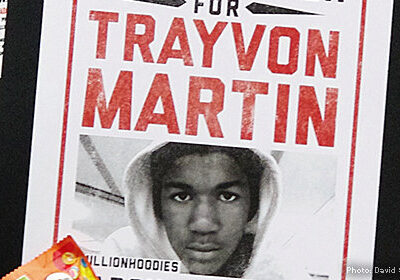
The hearing was to discuss the growth of violence and injustice associated with the "stand your ground" laws on the books in 25 states. Lucille's testimony, along with that of Trayvon Martin's mom, animated a largely academic discussion of the laws that the NAACP lists in their testimony as "the single greatest bringer of angst to our membership."
By Guest Blog- ACLU National
Stay Informed
Sign up to be the first to hear about how to take action.
By completing this form, I agree to receive occasional emails per the terms of the ACLU’s privacy statement.
By completing this form, I agree to receive occasional emails per the terms of the ACLU’s privacy statement.