
News & Commentary
Police Hide Use of Cell Phone Tracker From Courts Because Manufacturer Asked
Note: This blog post originally appeared on the National ACLU Blog of Rights. That post can be found here.
By Nathan Freed Wessler, Staff Attorney, ACLU Speech, Privacy & Technology Project
It appears that at least one police department in Florida has failed to tell judges about its use of a cell phone tracking device because the department got the device on loan and promised the manufacturer to keep it all under wraps. But when police use invasive surveillance equipment to surreptitiously sweep up information about the locations and communications of large numbers of people, court oversight and public debate are essential. The devices, likely made by the Florida-based Harris Corporation, are called “stingrays,” and unfortunately this is not the first time the government has tried to hide their use.
By Guest Blog- ACLU National

Millions of Americans Are Cut Out of Our Democracy
By Julie Ebenstein, Staff Attorney, ACLU Voting Rights Project
On Tuesday, Attorney General Eric Holder expressed his support for restoring voting rights to citizens who have committed a felony after they serve their terms in prison, complete parole or probation, and pay any restitution fines. While the ACLU believes rights should automatically be restored upon release from prison and being too poor to pay fines shouldn't leave you without a voice in our democracy, this is an important step in the right direction.
The federal government has rightfully acknowledged how post-Civil War era criminal disfranchisement laws intended to suppress the voting rights of African Americans "defy the principles of accountability and rehabilitation that guide our criminal justice policies."
This also isn't a problem that only affects a few people. If the more than 5.8 million disenfranchised Americans lived in a state of their own, that state would have 10 votes in the electoral college.
By Guest Blog- ACLU National
Tamils’ Smuggling Journey to U.S. Leads to Longer Ordeal: 3 Years of Detention
They each paid $55,000 for a ride by air and sea to a fresh chance in the Americas. They were captured within hours of their arrival in South Florida and served as witnesses for the F.B.I. in the investigation of their smugglers, cooperation that the men were led to believe would work in their favor as their cases made their way through immigration courts.
Three years later, they are still waiting for their cases to be resolved."
By admin

ACLU of Florida on WPBT2: Why Florida Needs Marijuana Reform
On Monday of this week, the Florida Supreme Court approved the ballot language for a proposed ballot initiative that would allow patients to legally obtain marijuana.
If the voters of Florida approve the measure, it will be an important victory for patients as well as reflect a recognition by Floridians that our fear-driven drug policies that have destroyed communities need to be re-evaluated and changed.
This past Friday, January 24th, ACLU of Florida Executive Director Howard Simon appeared on WPBT2's weekly news and public affairs program, Issues, hosted by Helen Aguirre Ferré to discuss the ballot initiative and other possible reforms for marijuana policy in the state.

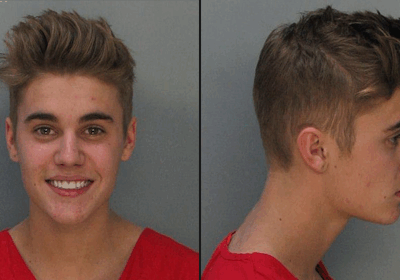
What Justin Bieber's Miami Beach Arrest Would Mean for Another Non-Citizen
By Diana Scholl
Communications Strategist, ACLU National
When I wrote about Justin Bieber's trouble with the law last week, we didn't know how far he'd fall in just a few days. Now Bieber has been arrested for late-night drag racing in Miami Beach.
If convicted, another immigrant in his situation would very likely languish in immigration detention before being deported. That person—like 84 percent of people in immigration detention-- would also likely not have an immigration attorney, let alone a high-priced one.
While the media is focused on what will happen to Bieber, let's instead focus on what will happen to all of the other immigrants who are detained and deported for lesser offenses than his. Learn more about them.
By Guest Blog- ACLU National
Let People Vote: Demonstration at A.G. Bondi's Office
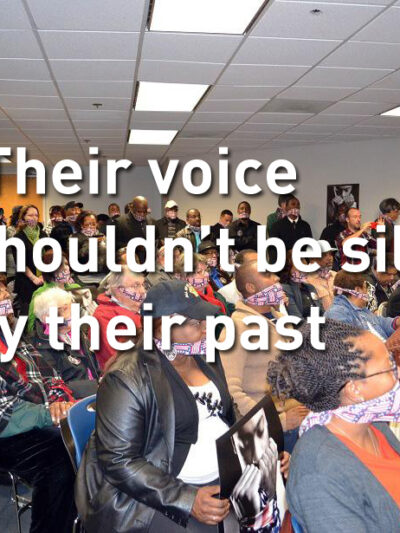
Florida holds the dubious distinction of being among the three worst states to permanently disenfranchise individuals with a felony conviction. These individuals have limited possibility for restoration of civil rights unless they receive discretionary executive clemency. On the near eve of Dr. Martin Luther King Jr.’s birthday celebration, we are poignantly reminded that racism still exists in American society, that there are too many national policies that are inherently racist, and that right here in Florida, we have more than our share of discriminatory policies and practices.
Today, over 80 individuals including clergy and leaders from across the state, came together to call on Attorney General Pam Bondi to “Let My People Vote”. The speakers called for the automatic restoration of civil rights, to expedite the rights restoration application process, and to give back the right to vote for the over 1.5 million Floridians who have been disenfranchised by this system.
By Joyce Hamilton Henry
Is Race Discrimination in School Discipline a Real Problem?
By Deborah J. Vagins, ACLU Washington Legislative Office
Note: This blog post originally appeared on the National ACLU Blog of Rights. That post can be found here.
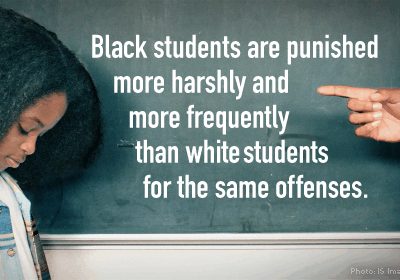
The Department of Justice and Department of Education announced today what we have known to be true for a long time: yes, race discrimination in school discipline is a real problem.
At an event with Secretary of Education Arne Duncan and Attorney General Eric Holder, the Departments jointly announced the release of this long awaitedfederal school discipline guidance. Secretary Duncan stated:
Positive discipline policies can help create safer learning environments without relying heavily on suspensions and expulsions. Schools also must understand their civil rights obligations and avoid unfair disciplinary practices.
By admin
Stay Informed
Sign up to be the first to hear about how to take action.
By completing this form, I agree to receive occasional emails per the terms of the ACLU’s privacy statement.
By completing this form, I agree to receive occasional emails per the terms of the ACLU’s privacy statement.