
News & Commentary
“First Comes Marriage, Then Comes ____”: What Today’s Win Means for the March toward Justice
“The Constitution promises liberty to all within its reach . . . .” So begins Justice Kennedy in his majority opinion that history will remember as one of the defining waystations on the road to full justice for the LGBT community. After decades of struggle, the nationwide freedom to marry for same-sex couples is finally being achieved.
The couples, the families, the children, the widows and widowers — today, all of them have been granted a dignity that has been denied to them for far too long. Going forward, the protections and responsibilities — and the joy — that marriage provides to so many will be available to families across the nation.

Suing to Stop New Florida Abortion Restrictions
Today we filed suit to stop Florida’s new mandatory 24-hour waiting period to receive an abortion. Governor Scott signed the bill last night and we filed our complaint first thing this morning. You had our back during the legislative session and contacted your elected officials; now we’ve got yours in the courts.
Our clients are Gainesville Woman Care and Medical Students for Choice and they assert that this new law violates Florida’s constitutional right to privacy and equal protection. We warned the legislature that the abortion delay was unconstitutional, but they passed the law anyway under the theory that women needed a little more time to think about the abortion they’d already decided to have. Read the complaint here.

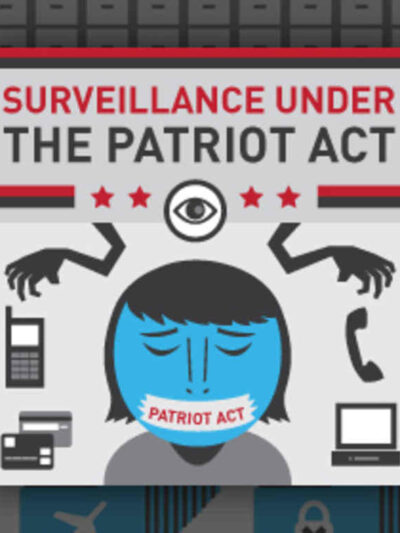
Extension of Patriot Act is a Vote for Unconstitutional Snooping
When you hear the phrase "Patriot Act," if you think of massive government surveillance, top-secret data collection, and the enormous National Security Agency program gathering information about Americans' phone calls, then you're likely thinking of Section 215.
Section 215 is known as the "business records" provision of the 321-page Patriot Act. On paper, it allows federal agencies to obtain secret court orders to compel third parties to turn over "any tangible thing" that is "relevant" to foreign intelligence or terrorism investigations. In practice, the phrase "any tangible thing" has meant almost anything surveillance agencies want it to, while the word "relevant" has meant almost nothing at all.
An Intense Spring in Tallahassee
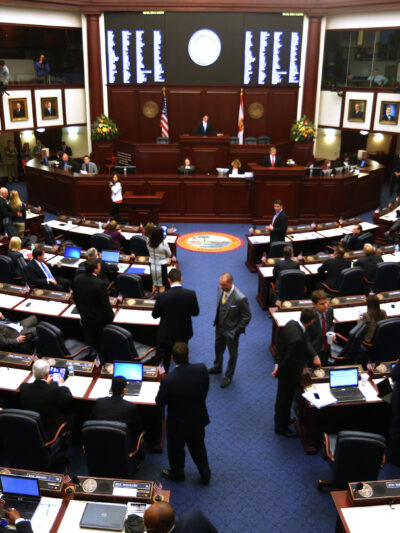
ACLU in the House!...and Senate.
With the support of your activism, the ACLU of Florida defeated a number of bad bills this legislative session and amended others to minimize the damage to civil rights and liberties in our state. We thank you for exercising your rights and standing up for the constitution. We logged over 15,000 legislative contacts this session, lobbied legislators and committees, and collected 10s of thousands of petition signatures. Here’s what we were able to accomplish at the state capitol for the 2015 legislative session:
Racism Overwhelming the Miami Beach Police Department, and Our Communities
The release of racist, sexist, and homophobic emails primarily authored by two Miami Beach police officers (who have since left the Police Department), further exposes the level of bigotry and violent mentality endemic within the Department. The news regarding the emails also occurred as the City prepares for Urban Beach Weekend, an annual Memorial Day celebration similar to Ultra Music Festival and Pride that attracts thousands of mostly young black adults.
For several years, the ACLU has been meeting with Miami Beach police officers and other city officials to discuss the complaints from visitors and residents about the City’s over-policing during that weekend – heightened presence of police officers everywhere, use of dogs, flood lights, and DUI checkpoints which are almost never used any other weekend. Raymond Martinez, the former police chief, even sat in on some of those meetings and acted as if he saw no problem with his department’s treatment of black youth. All the while, he was one of the main recipients of these emails. Whether receiving these emails caused him chagrin or amusement, we know for certain that, as the head cop in charge, he did absolutely nothing to end this behavior or to punish those who were in direct violation of departmental policies.

If You’re Black or Brown and Ride a Bike in Tampa, Watch Out: Police Find That Suspicious
By Nusrat Choudhury, Staff Attorney, ACLU's Racial Justice Program
The Tampa Bay Times' recent disclosure that police are targeting Blacks who ride bicycles — including children as young as three years old — for dramatically high rates of stops and searches is the latest piece in the nationwide debate about racial profiling that has followed the police-involved deaths of Michael Brown, Eric Garner, Walter Scott, Freddie Gray, and countless others.
Communities across the country are connecting the deluge of incidents in which police use force against Blacks (or, as in Gray's case, show gross disregard for Black life) to everyday interactions in which police stop, frisk, and search Blacks and Latinos because of their race, rather than evidence of wrongdoing — a practice well-documented in New York, Boston, Philadelphia, and Ferguson. The latest reports from Tampa underscore just how little progress has been made in rooting out racial profiling and how the routine over policing of communities of color can lead to interactions that tragically devolve into the use of force.
By Guest Blog- ACLU National

A Community Conversation on Race Relations and Policing in Tampa
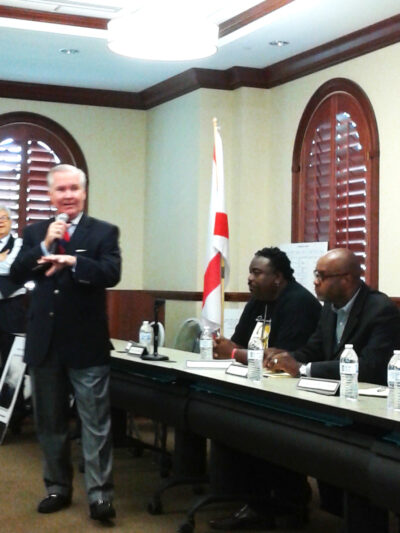
Last week, I attended a Town Hall in Tampa that was convened by Attorney Barry Cohen to address race relations and law enforcement. There was a panel of 14 individuals that included judges, attorneys, the Public Defender, educators, the Tampa Police Department, the Sheriff’s office, parents, and a youth. There were over 200 people in attendance representing a cross-section of Tampa and Hillsborough.
The conversation was very timely, in light of the recent publication of a report showing that blacks are being disproportionately over-policed in Tampa. Attendees shared stories of their experiences with law enforcement, judges, the school system, the criminal justice system, and the devastation to communities due to the intersection of race and poverty, and the interface with law enforcement and the courts.
By Joyce Hamilton Henry
Riding While Black in Tampa
This past weekend, the Tampa Bay Times reported on evidence that Blacks are being racially profiled and over-policed by law enforcement in Tampa. The paper analyzed twelve years of data on bicycle citations and discovered that of the 10,000 bicycle tickets issued by Tampa Police, 79% were given to Blacks—even though Blacks comprise only a quarter of the city’s population. The investigation also revealed that in 2014, bicycle citations were concentrated in Tampa’s poor, Black neighborhoods.
What has Tampa Police’s targeting of Blacks for bicycle citations accomplished? According to the data, only 20 percent of citations led to arrests. Looking closely at individual citations only raises more questions about the effectiveness of targeting poor Black neighborhoods for bicycle law enforcement. Did it further public safety, for example, for the Tampa Police to confiscate the bike of a 54-year-old man because he couldn't produce a receipt to prove it was his?
By Joyce Hamilton Henry

Legislative Update, Weeks 6-7: Worst Week for Freedom
Six weeks down, three to go.
Our sixth week with the Florida’s legislature might have been its worst yet. The first major bill that would impact the civil rights and liberties of Floridians went to the House floor. And on a party line vote, the House passed HB 7111.
If made law, this bill will allow state funded adoption agencies to refuse to place children in otherwise loving and qualified homes if doing so would violate the agencies’ religious or moral beliefs. Gay? Divorced? In an interfaith relationship? If you’re looking to adopt in Florida, the agencies that have been entrusted to find our most vulnerable kids permanent homes may be able to turn you away. The good news is that the bill hasn’t been introduced independently in the Senate and an attempt to attach it to another bill failed, but the fight isn’t over, as the House bill could be brought up any moment. We need to remain vigilant: contact your Senator and tell him or her to oppose this hurtful bill. If you need some inspiration, read this story from 16-year-old Anthony of Clearwater to see how this bill could have denied him – and many children like him – the chance at his perfect family.

Stay Informed
Sign up to be the first to hear about how to take action.
By completing this form, I agree to receive occasional emails per the terms of the ACLU’s privacy statement.
By completing this form, I agree to receive occasional emails per the terms of the ACLU’s privacy statement.