
News & Commentary
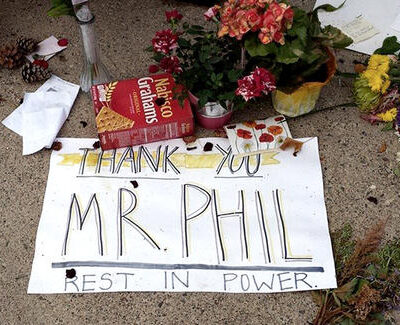
Philando Castile’s fate could have been my fiancé’s
Can you imagine what it is like to wake up every day in fear, knowing today could be the last you see your fiancé because of the color of his skin?As an African American woman, I constantly live in fear my fiancé or myself will not make it home to one another every night.I fear that one of us will be stopped by the police for a broken taillight and shot down in fear, like Philando Castile. I fear one of us will be gunned down after heading to the convenience store for skittles, like Trayvon Martin. I fear we will be out together, enjoying our evening, and one of us will be shot down for laughing, like Rekia Boyd. I fear I will call upon a neighbor for help after being in an accident and be shot down, like Renisha McBride. I fear my fiancé will be out celebrating with friends the night before our wedding, and be executed because a cellphone was mistaken for a gun, like Sean Bell.I am afraid that because of how I look, I too could be executed regardless of the circumstances.
The Pulse shooting and the meaning of "home"
Sunday afternoon, as the shocking details of the shooting at gay nightclub Pulse in Orlando trickled in and the totality of the horror was becoming clear, I had a strange realization: I’ve been to that bar.As a gay man, I want to let straight folks in on a little secret: For many of us, when we’re traveling out of town, the first thing we do after setting down our bags in the hotel room is open up Yelp and find the nearest gay bar. Sure, grabbing a beer at the hotel bar might be easier. But whatever strange town you’re in, a gay bar is an extension of home.By "home," I don’t mean where you’re from, I mean someplace where you are welcome, where you can relax, where you are instantly understood without saying a word.
"My Name is Catherine" - A Transgender Floridian's Journey to Legal Recognition
Catherine Merchant, a transgender woman from the Panhandle, was denied a name change by a state judge. Three years later, with the help of the ACLU of Florida, she won in her fight to have her legal name reflect who she is. This is her story in her own words:
A name is a very special thing, just a set of words that refer to you more personally than anything else, but I imagine most people go through their whole lives without ever giving their name any real thought. For most, it just isn't something to be concerned about one way or the other.Your name is used hundreds of times, every single day, everywhere you go. It is one of those things you just absorb into your being, one more fact about you.
But what if you found out your name isn't really yours? What if every time someone used your name, it simply felt wrong, like people were consistently confusing you with someone else? Or even worse, like they were denying you your true identity?
By Guest Blog

We're Being Invaded! (Apparently. I Guess. According to These Guys.)
The lives of Floridians could be changed forever.
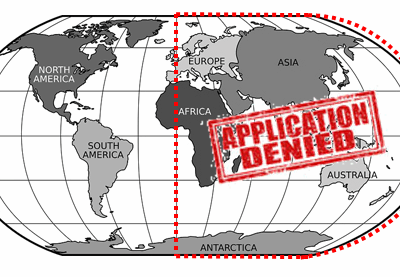
Thanks to the “vigilance” of Representative Lake Ray from Jacksonville, it has come to our attention that our way of life in the Sunshine State is at serious risk of being conquered or destroyed by foreign invaders.
As a precautionary measure, Rep. Ray is trying to pass the ridiculous “Prevention of Acts of War” bill that would secure our way of life based on Florida’s power to defend itself against the imminent threat of surreptitious invasion the state has been facing for the last 15 years.
How is this bill supposed to help us during a time of war? Let’s get into it.
Florida—State of the Death Penalty
Michael Lambrix was supposed to die today.
Three months ago his death warrant was signed by Governor Rick Scott. Michael was moved to a special “Death Watch” cell, steps from the execution chamber. He was fitted for his burial suit and was visiting with his friends and family for what he assumed would be the final time.
However, thanks to the recent ruling from the United States Supreme Court that Florida’s death penalty statute is unconstitutional, Michael was allowed to challenge his sentence. Attorney Brian Stull of the ACLU Capital Punishment Project was among those who filed a brief on behalf of Michael. Last week the Florida Supreme Court agreed to a stay of execution while they sort out the question of which death row inmates might be entitled to a new sentence.
New Evidence Suggesting Racial Profiling on Florida Roadways
By Nusrat Choudhury, Staff Attorney, ACLU Racial Justice Program
Updated below
Sam Dubose. Walter Scott. Sandra Bland. 2015 showed in terrible and vivid detail how even routine police traffic stops carry the risk of escalating to arrest or the use of force — even lethal force. Traffic stops are not simply innocuous encounters. They can be deadly, particularly for Black people.
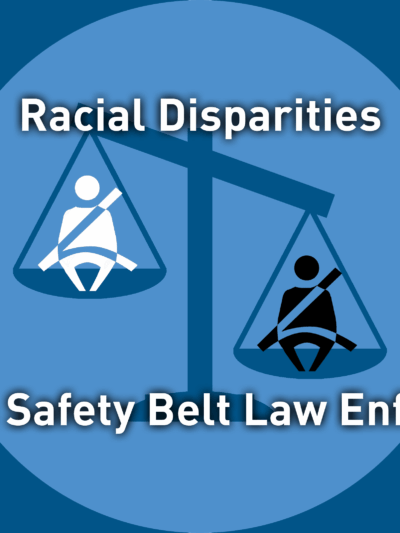
When evidence suggests that certain communities are targeted for traffic stops because of their race or ethnicity, we need to take heed. Today the ACLU is releasing a report providing just that. “Racial Disparities in Florida Safety Belt Law Enforcement” is the first report to analyze publicly available seat belt citation data reported by law enforcement agencies across the state to the Florida Department of Highway Safety and Motor Vehicles in 2014 and 2011.
By Guest Blog
Time to put those bogus gun-rights claims to rest
Though we find ourselves in an election year, some of the responses to President Obama’s recent initiatives on gun control reverberate outside this political silly season.
Some responses to the president’s actions were easily predictable: How effective will these very limited initiatives really be in curbing rampant gun violence? Are some of these initiatives (for example, expanding the number of gun buyers who are subject to a background check) an overreach of executive authority? Is he exercising powers that belong to Congress, not the executive branch?
But it is past due to retire one common theme — the bogus claim that “any regulation of gun ownership violates Second Amendment rights.”
This is Florida, not Guantánamo*
Desperate times call for desperate measures, and desperate measures were taken during the last month of 2015 to call attention to the inhumane treatment that’s ongoing in our detention of civil immigration detainees.
In early December, a group of ten men from Bangladesh started a hunger strike in protest of their detention at the Krome Service Processing Center. The men, many fleeing violence in Bangladesh, were originally detained in Hidalgo, Texas, shortly after requesting political asylum when they crossed into the country from Mexico. Most of the men have been in detention for over a year without being granted parole by Immigration and Customs Enforcement (ICE) while fighting their asylum cases. And this is not a first. Over the last few months there’s been a wave of hunger strikes in various immigration detention facilities in South Florida and across the country.
Uniting Against Religious Intolerance in a Climate of Fear
By Rebecca Guterman, ACLU's Program on Freedom of Religion and Belief
Since the devastating attacks in Paris and the mass shooting in San Bernardino, the United States has seen a spike in hate crimes against Muslims, efforts by governors in 30 states to bar the resettlement of Syrian refugees, and dangerous escalation in anti-Muslim rhetoric from presidential contenders.
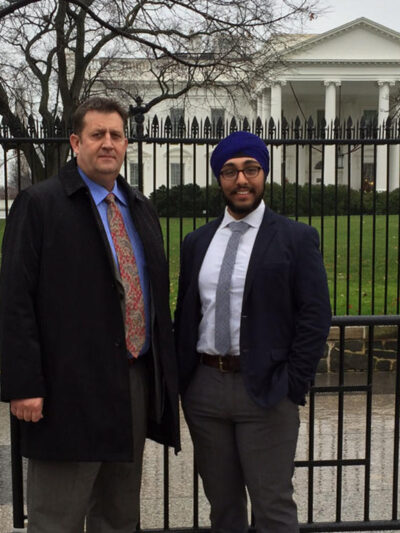
In an effort to stem the tide of religious intolerance, a variety of civil liberties and faith-based organizations have launched a new campaign, “Know Your Neighbor,” to promote interfaith understanding and protect basic religious freedoms. Last Thursday, the American Civil Liberties Union joined a diverse collection of advocates at the White House, including the Baptist Joint Committee for Religious Liberty, the Center for Inquiry, the Hindu American Seva Societies, Muslim Advocates, the National Council of Churches, the Sikh Coalition, and others to help build knowledge and tolerance in this time of increasing divisiveness about religious liberty – a value we believe is at the heart of the American experience.
By Guest Blog- ACLU National
Stay Informed
Sign up to be the first to hear about how to take action.
By completing this form, I agree to receive occasional emails per the terms of the ACLU’s privacy statement.
By completing this form, I agree to receive occasional emails per the terms of the ACLU’s privacy statement.