Court Cases
All Cases
73 Court Cases
Jul 1, 2025

ACLU of Florida v. FDLE
In August and September 2022, we sent the Florida Department of Law Enforcement requests for records related to Executive Order 21-223 and 2022’s Senate Bill 1808 (seeking information regarding enforcement efforts against undocumented immigrants who the state claims have traveled to Florida from the U.S.-Mexico border). We filed a public-records complaint on July 19, 2023. The FDLE filed their response on September 5, 2023, saying they were understaffed.
At a hearing in October 2023, the court ordered the FDLE to produce the records within 45 days. The FDLE encountered a delay after producing just two records. Due to internal turmoil at FDLE caused by the Governor’s office in connection with a separate public-records lawsuit, FDLE counsel in the case resigned. Subsequently, FDLE made successive productions of records revealing that state and local officers had initiated stops and made dozens of immigration-related arrests without federal authority, as part of a border strike force at the direction of Governor DeSantis, since October 2021.
Jun 16, 2025
ACLU of Florida v. USCIS
The ACLU of Florida submitted a Freedom of Information Act request to the U.S. Citizens and Immigration Services (USCIS) in August 2024 concerning changes to an asylum application processing policy. In 2023, over one million applications were pending with USCIS. This includes hundreds of thousands of affirmative asylum cases pending over two years, with several thousand pending for over a decade. This effectively leaves affirmative asylum seekers in limbo, unable to progress in their education, find a job, or live a secure life.
USCIS has been known to operate under a “last in, first out” system that leaves those who have been waiting the longest left to wait and wonder even more while new applications are prioritized. In response to this unacceptable lack of transparency, the ACLU of Florida inquired to USCIS about their process for scheduling interviews, prioritizing cases, and addressing delays. Because the government failed to produce the documents, we filed a lawsuit on December 16, 2024, seeking to compel USCIS to immediately release internal communications regarding its systems to adjudicate affirmative asylum applications and address the critical backlog of cases.
Jun 6, 2025
Florida Immigrant Coalition v. Uthmeier
The ACLU of Florida and partners filed a lawsuit on April 2, 2025, challenging Florida’s new anti-immigrant law, Senate Bill 4C (SB 4C), which authorizes state and local law enforcement to imprison people based on their manner of entering the country — powers the Constitution reserves exclusively to the federal government. The district court granted a temporary restraining order against the law on April 4.
Certain individuals were arrested after the issuance of the TRO, and on April 18, the district court extended the TRO, explicitly including within its scope law enforcement that had the power to enforce SB 4C, and directed the Attorney General to notify those entities of the injunction.
On April 29, the court granted a preliminary injunction and certified a class. Both the Eleventh Circuit and Supreme Court denied the state’s request to put the injunction on hold. Oral argument in the Eleventh Circuit is set for the week of October 6 in Atlanta. On June 17, the district court entered an order holding Florida’s Attorney General James Uthmeier in civil contempt for violating a notification requirement of the April 18 order. Uthmeier has appealed the order finding him in contempt.
Jun 1, 2025
ACLU of Florida v. Rhoden
The Baker County Detention Center (“Baker”) operates in part as an immigration detention center. In September 2022, after the ACLU of Florida and others publicly criticized Baker’s conditions of confinement and treatment of people detained there, Baker denied the ACLU of Florida and the Baker Legal Assistance Program access to previously approved legal visits to meet with current and prospective clients to address their time-sensitive legal matters. Baker also threatened to cancel subsequent scheduled visits.
Following this, Baker changed their legal mail and legal phone call policies without notifying the ACLU of Florida or other attorneys, obstructing access to confidential legal mail and legal phone calls. The ACLU of Florida filed a federal lawsuit in September 2022, which was quickly amended, arguing that Baker’s actions violated the plaintiffs’ First Amendment rights to confidential attorney-client communications and right to be free from retaliation.
May 22, 2025
Netchoice v. Moody
A 2021 Florida law generally prohibits “social media platforms” from censoring posts by or about political candidates and “journalistic enterprises.” It specifically penalizes any content moderation practices the law classifies as censorship, deplatforming, or shadowbanning of both political candidates and “journalistic enterprises.” Under the guise of “prohibiting censorship,” these laws seek to replace the private entities’ editorial voice with preferences dictated by the government. The ACLU’s position is that the government’s desire to have private speakers distribute more of any viewpoint is not a permissible basis for regulating the editorial decisions of private platforms. Choosing what not to publish and how to prioritize what is published is protected expression.
On the very largest platforms, free expression values are best served if companies choose to preserve as much political speech as possible, including the speech of public figures. But, regardless of what platforms ought to permit as a matter of corporate policy, the government can’t constitutionally mandate what they ultimately choose. We filed amicus briefs in the district court (which granted a preliminary injunction on June 30, 2021), in the Eleventh Circuit (which, on May 23, 2022, affirmed in part and reversed in part the injunction), and the Supreme Court, which, on July 1, 2024, asked the Eleventh Circuit to reconsider the case under a particular standard. In August 2024, the Eleventh Circuit sent the case back to the district court, where the case is proceeding again. The plaintiffs filed an amended complaint in November 2024.
May 8, 2025
Jones v. Ceinski
Mr. Jones is a Black disabled man who was injured by law-enforcement use of force. On August 8, 2020, Officer Ceinski stopped Mr. Jones for a traffic infraction in Sarasota, Florida. Mr. Jones complied with the officer’s request to exit the vehicle, but had difficulty due to a disability affecting his hands. While offering his documents to the officer, Mr. Jones provided his concealed carry permit and informed the officer there was a weapon in the car. Upon seeing the weapon in the car, the officer violently restrained and choked Mr. Jones despite him standing in front of the vehicle and making no attempt to reach for the weapon.
After the incident, Mr. Jones sued Officer Ceinski for violating his Fourth Amendment right to be free from excessive force. The district court granted summary judgment for the officer based on qualified immunity, ruling Officer Ceinski’s conduct did not violate a clearly established federal right. We filed an amicus brief in the Eleventh Circuit in December 2023, asking the court to consider an officer’s knowledge of an individual’s disability as a central aspect of determining, under Graham v. Connor and its progeny, the objective reasonableness of a police officer’s use of force. The brief also contended that the failure to consider disability in the Graham analysis disparately harms Black disabled people because they are disproportionately subjected to police use of force.
Mar 12, 2025
Cambridge Christian Schools v. Florida High School Athletic Association
The Florida High School Athletic Association (FHSAA) forbade Cambridge Christian School from leading a prayer at football games conducted by the Association, and the school argued this violated free speech and burdened its religious freedom.
In November 2019, the Eleventh Circuit reversed the district court’s dismissal of the free-speech and free-exercise claims. During the second appeal to the Eleventh Circuit (after the district ruled for the FHSAA on summary judgment), in October 2022 we joined partners in filing an amicus brief arguing that it was not a free-exercise violation to deny the prayer, and that it would be an establishment clause violation to permit it. Oral argument was held in June 2023.
In September 2024, the court affirmed the grant of summary judgment to FHSAA on both the free-speech and free-exercise claims on government-speech grounds. It also vacated the district-court’s judgment in favor of the FHSAA on the declaratory- and injunctive-relief claims and instead instructed the court to dismiss those claims for lack of subject-matter jurisdiction.
Mar 3, 2025
Austin v. Lamb
In 2023, the Florida Legislature passed SB 266, which bans the funding of expression that “[a]dvocate[s] for diversity, equity, and inclusion, or promote[s] . . . political or social activism,” and restricts the viewpoints that can be taught in general education courses. Through the implementation of this law, the state and universities have limited professors’ academic freedom, including their scholarship. In addition to denying otherwise available research and scholarship funding, the state has stripped hundreds of courses of their longstanding general education status, making it harder for Florida’s students to study ideas the state dislikes.
On behalf of educators and the broader university community, the ACLU of Florida and co-counsel filed a federal lawsuit on January 16, 2025, contending that SB 266 violates First Amendment protections by compelling viewpoint-based censorship and undermining the free exchange of ideas in public universities.
Jan 1, 2025

Tray v. Florida State Board of Education
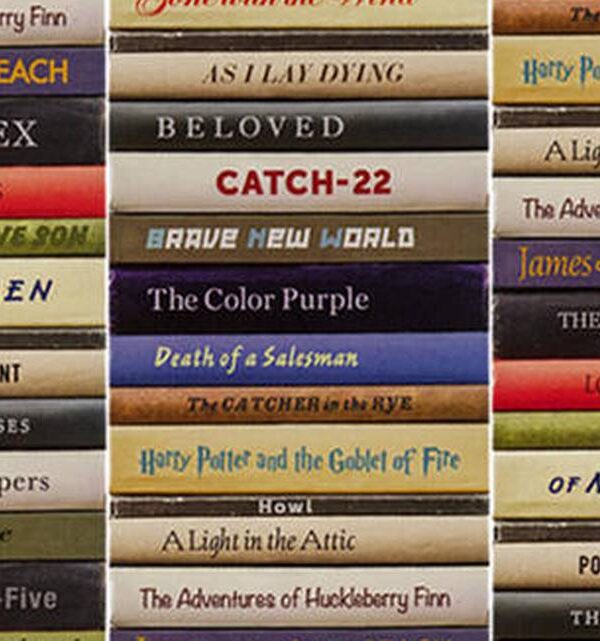
In June 2024, the ACLU of Florida and partners filed a lawsuit representing parents of Florida public school students who sued the DeSantis administration’s Board of Education for violating their First Amendment rights through the implementation of 2023’s HB 1069.
The lawsuit argues that HB 1069 discriminates against parents who oppose book bans and censorship. It gives parents who favor censorship a formal process to challenge a local school board’s decision to keep a book on school shelves, while parents opposed to censorship are excluded from the process altogether. The plaintiffs, parents of students in Florida public schools, are seeking review of their local school boards’ decisions to remove or restrict books in their children's school districts and do not have access to seek that review.
Stay Informed
Sign up to be the first to hear about how to take action.
By completing this form, I agree to receive occasional emails per the terms of the ACLU’s privacy statement.
By completing this form, I agree to receive occasional emails per the terms of the ACLU’s privacy statement.